Menopause Weight Gain: Why It Happens and What Actually Helps
| Why it happens | Menopause weight gain comes from falling estrogen, muscle loss, poorer sleep and higher stress. |
| What changes | Fat shifts from the hips and thighs toward the belly, so shape changes as much as weight. |
| What helps most | More protein, plenty of fiber, resistance training, steady sleep and stress control. |
| Where a supplement fits | A fiber-first capsule can support appetite — it does not reverse hormonal change. |

Why the middle years feel different
Many women reach their late forties and early fifties feeling as though the rules suddenly changed. The eating and exercise habits that once kept things steady no longer seem to, the waistband gets tighter, and the shape of the body shifts even when the scale barely moves. If that sounds familiar, you are not doing anything wrong. Menopause weight gain is a real, well-documented phenomenon with clear biological roots — and understanding those roots is the first step to working with your body rather than against it.
The honest picture is this: menopause does not doom you to gain weight, but it stacks several factors against you at once. Hormones shift, muscle quietly declines, sleep becomes lighter, stress often rises, and life tends to get busier and more sedentary. Each factor is manageable on its own. Seeing them clearly lets you focus your effort where it actually pays off, instead of blaming willpower.
The real causes of menopause weight gain
1. Falling estrogen changes where fat is stored
The headline change of menopause is a steep decline in estrogen. Beyond its role in reproduction, estrogen influences where the body stores fat. As levels fall, fat storage shifts away from the hips and thighs and toward the abdomen — the classic change in shape that many women notice first. This is why menopause is so strongly associated with belly fat specifically, a pattern we explore more broadly in why do I gain belly fat. The abdominal fat that accumulates is more metabolically active, which is part of why waist size becomes something to pay attention to.
2. Muscle loss slows metabolism
From the forties onward, most adults gradually lose muscle unless they actively work to keep it — a process that menopause tends to accelerate. Muscle is metabolically expensive tissue that burns energy even at rest, so as it declines, your resting metabolic rate quietly falls with it. Eat the same amount you always did while burning a little less, and weight creeps up. If you have noticed the classic signs of a slow metabolism in these years, muscle loss is often a big part of the story.

3. Sleep and hot flushes
Night sweats, hot flushes and lighter sleep are common through the menopause transition, and disrupted sleep has knock-on effects on weight. Short or broken sleep raises hunger hormones, sharpens cravings and drains the energy you would otherwise put into movement. We cover this mechanism in detail in can lack of sleep cause weight gain — and during menopause, poor sleep is often part of the picture rather than a separate problem.
4. Stress and cortisol
The menopausal years often coincide with a demanding stretch of life — careers, ageing parents, growing children. Ongoing stress raises cortisol, which encourages fat storage around the middle and drives cravings for comfort food, compounding the estrogen-driven shift toward belly fat. Our guide to does stress cause weight gain explains that loop, which is especially relevant now.
5. A more sedentary routine
Finally, everyday activity often drifts downward with age — fewer steps, more sitting, less spontaneous movement. Combined with lower muscle mass, this widens the gap between the energy you take in and the energy you use. None of this is inevitable, and it is one of the most fixable pieces.
Support appetite through the transition
SlimSure combines glucomannan fiber with seven more named actives in one simple daily capsule — an easy way to support fullness and everyday metabolism while you build the habits that matter most in midlife. Backed by a 60-day money-back guarantee.
See SlimSure Packages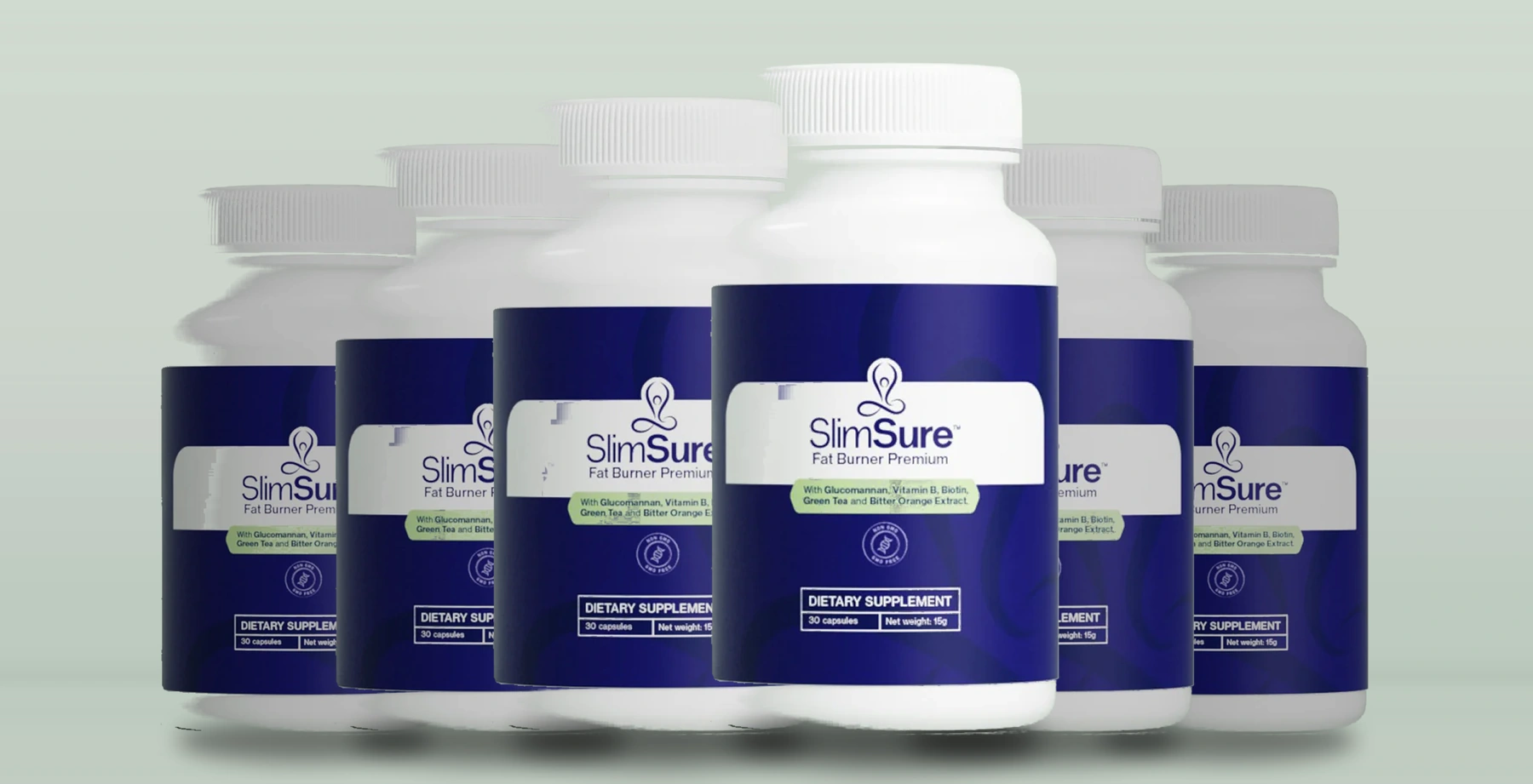
What actually helps with menopause weight gain
Here is the encouraging part: the same fundamentals still work, they simply need to be applied more deliberately and more patiently than they did at 25. Focus your energy here.
Prioritise protein
Protein becomes more important, not less, in menopause. It is the most filling nutrient, it helps preserve the muscle you are trying to protect, and it steadies appetite across the day. Aim for a protein source at every meal, starting in the morning — our high-protein breakfast ideas are a simple place to begin.
Lift weights, seriously
If you take one thing from this article, make it this: resistance training is the single most valuable exercise in menopause. It protects and rebuilds muscle, supports metabolism, and helps maintain bone density at a time when bone loss also accelerates. Two or three focused sessions a week — bodyweight, bands, dumbbells or machines — compound impressively over months. It is never too late to start.
Fill up on fiber and whole foods
Soluble fiber from vegetables, beans, oats, fruit and seeds slows digestion, supports fullness and helps steady blood sugar. Building meals around whole, minimally processed foods naturally crowds out the refined carbohydrates that encourage abdominal storage. For a deeper look at using fiber to manage hunger, see how to curb appetite for weight loss.
Protect sleep and manage stress
Given how central sleep and stress are to menopause weight gain, treating them as priorities pays off. A consistent sleep schedule, a cool dark bedroom, a calming wind-down and regular stress resets — a walk, slow breathing, time offline — directly target two of the biggest hidden drivers.
- ✓ Anchor every meal with protein, starting at breakfast.
- ✓ Strength-train two to three times a week to protect muscle and bone.
- ✓ Fill half your plate with fiber-rich vegetables and whole foods.
- ✓ Keep the bedroom cool and dark to ease night sweats and protect sleep.
- ✓ Walk daily and add movement into ordinary tasks.
- ✓ Be patient — progress is real even when it is slower than it once was.
What the research says about weight at menopause
The most useful finding in this field is a separation. A longitudinal analysis in JCI Insight (2019) tracked women through the transition and found that total weight gain tracks chronological ageing, while the redistribution of fat toward the abdomen and the loss of lean mass track the menopause transition itself. That distinction matters, because it means the scale is the wrong instrument for measuring what is actually changing.
A review in Climacteric (2012) reaches the same conclusion and adds the practical corollary: the intervention with the best evidence is preserving muscle, not cutting calories harder. Protein does much of that work — a review in the American Journal of Clinical Nutrition (2015) found higher protein intakes protect lean mass during weight loss — which is why the advice here overlaps with our guide to the signs of a slow metabolism.
Where a fiber-first supplement fits
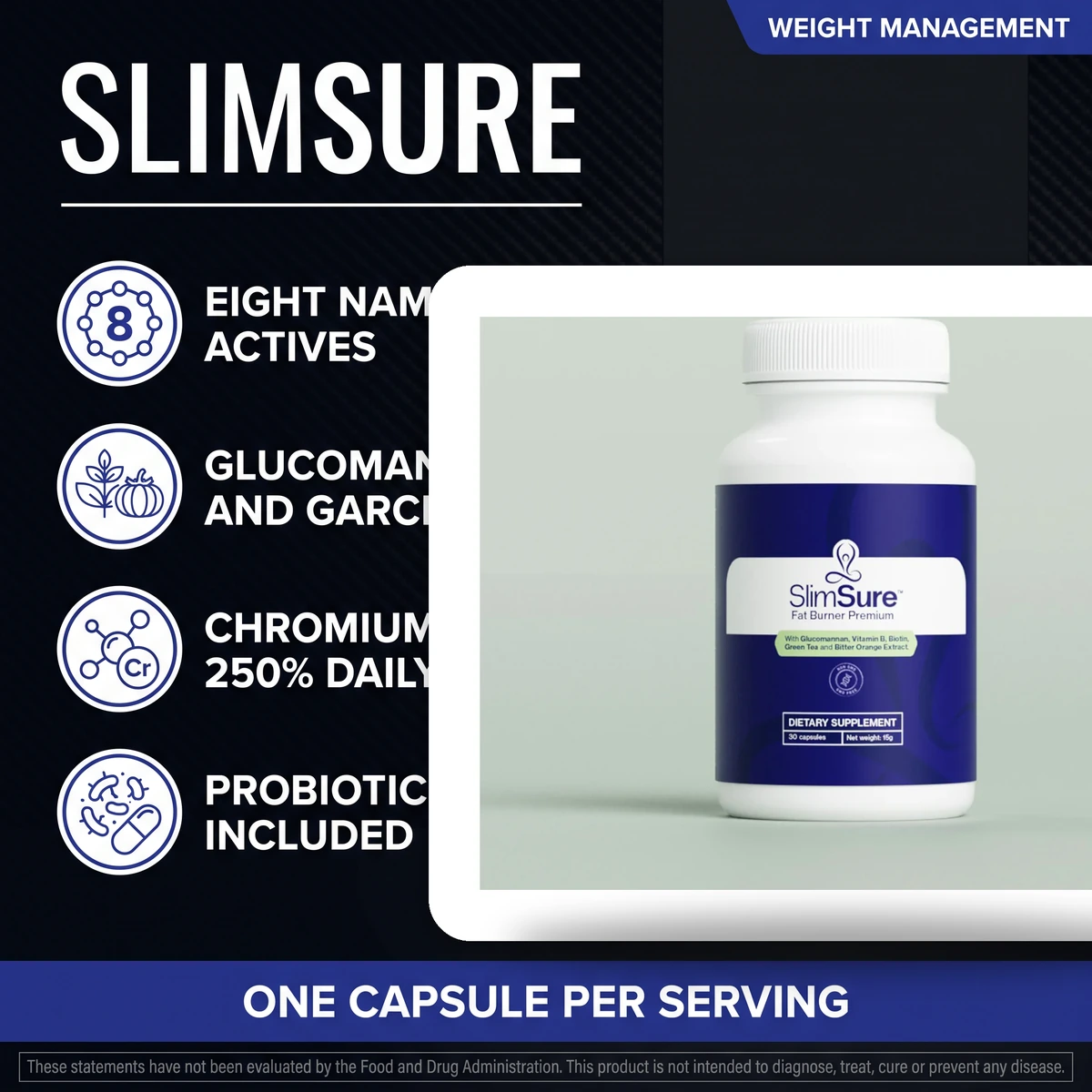
Let us be clear about what a supplement can and cannot do. No capsule reverses the hormonal changes of menopause or melts belly fat, and any product claiming to is not being honest. What a well-built formula can do is make the fundamentals easier to keep on ordinary, busy days. SlimSure is designed around this idea: a soluble-fiber base of glucomannan to support fullness, plus botanicals such as green tea and bitter orange extract traditionally used to support everyday metabolism, together with raspberry ketones, L-carnitine, a vitamin B complex and biotin — eight named actives in a single once-daily capsule taken with water.
Used consistently alongside protein, fiber, strength training and good sleep, a fiber-first capsule becomes one more small lever working in your favour through the transition. It is support for good habits, not a replacement for them or for medical care — and menopause is a good time to talk to your own healthcare professional about your individual needs. For more practical reads, browse the SlimSure blog or start on our homepage. If your progress has stalled, our piece on weight-loss plateau causes is a useful next step.
FAQ
Why do women gain weight during menopause?
Menopause weight gain comes from several overlapping changes. Falling estrogen shifts where the body stores fat, moving it from the hips and thighs toward the abdomen. At the same time, age-related muscle loss lowers the resting metabolic rate, and disrupted sleep, higher stress and a more sedentary routine all add to the effect. It is rarely one single cause.
Is menopause belly fat different from other weight gain?
The pattern changes more than the total. Lower estrogen encourages fat to settle around the midsection rather than the hips, so many women notice their shape changing even if the number on the scale moves only a little. This abdominal fat responds to the same sensible habits that reduce total body fat, applied patiently.
Can you lose weight during and after menopause?
Yes. It can feel harder because metabolism is lower and hormones have shifted, but the fundamentals still work: enough protein, plenty of fiber, resistance training to protect muscle, good sleep and stress management. Progress may be slower than it was at 25, so consistency and patience matter more than intensity.
Why is protein and strength training so important in menopause?
Muscle is metabolically active tissue that helps keep your resting metabolism up, and menopause accelerates muscle loss. Eating enough protein and doing regular resistance training protect and rebuild muscle, which supports metabolism, strength and bone health at exactly the time these matter most.
Can a supplement help with menopause weight gain?
No supplement reverses hormonal change or targets menopause belly fat specifically. A fiber-first formula such as SlimSure can support everyday appetite and fullness, which makes a sensible eating pattern easier to keep alongside protein, movement and sleep. It is support for good habits, not a replacement for them or for medical care.
The SlimSure Research Team is an independent group of writers and reviewers focused on everyday weight management, nutrition and dietary-supplement science. We translate peer-reviewed research and guidance from bodies such as the NIH, the North American Menopause Society and Harvard T.H. Chan School of Public Health into plain, practical advice. Our articles are informational only and are reviewed for accuracy before publishing; they are not a substitute for personalised medical care. |
References
- Greendale GA, Sternfeld B, Huang M, et al. Changes in body composition and weight during the menopause transition. JCI Insight, 2019. PMID: 30843880.
- Davis SR, Castelo-Branco C, Chedraui P, et al. Understanding weight gain at menopause. Climacteric, 2012. PMID: 22978257.
- Leidy HJ, Clifton PM, Astrup A, et al. The role of protein in weight loss and maintenance. American Journal of Clinical Nutrition, 2015. PMID: 25926512.
- The Menopause Society — Menopause and Weight / Managing Weight Through Midlife.
- National Institutes of Health, Office of Dietary Supplements — Dietary Supplements for Weight Loss: Fact Sheet for Consumers.
† These statements have not been evaluated by the Food and Drug Administration. This product is not intended to diagnose, treat, cure or prevent any disease. This article is for general information only and is not medical advice; consult a qualified healthcare professional before making changes to your diet or supplement routine, especially during menopause.